From His Eminence Metropolitan Cleopas of Sweden
Episcopal Lenten Encyclical for Holy Thursday
April 9, 2026
Dear Fathers and Brothers in Christ,
Our Beloved Children,
“700 lashes and 50 puncture wounds to the head!”
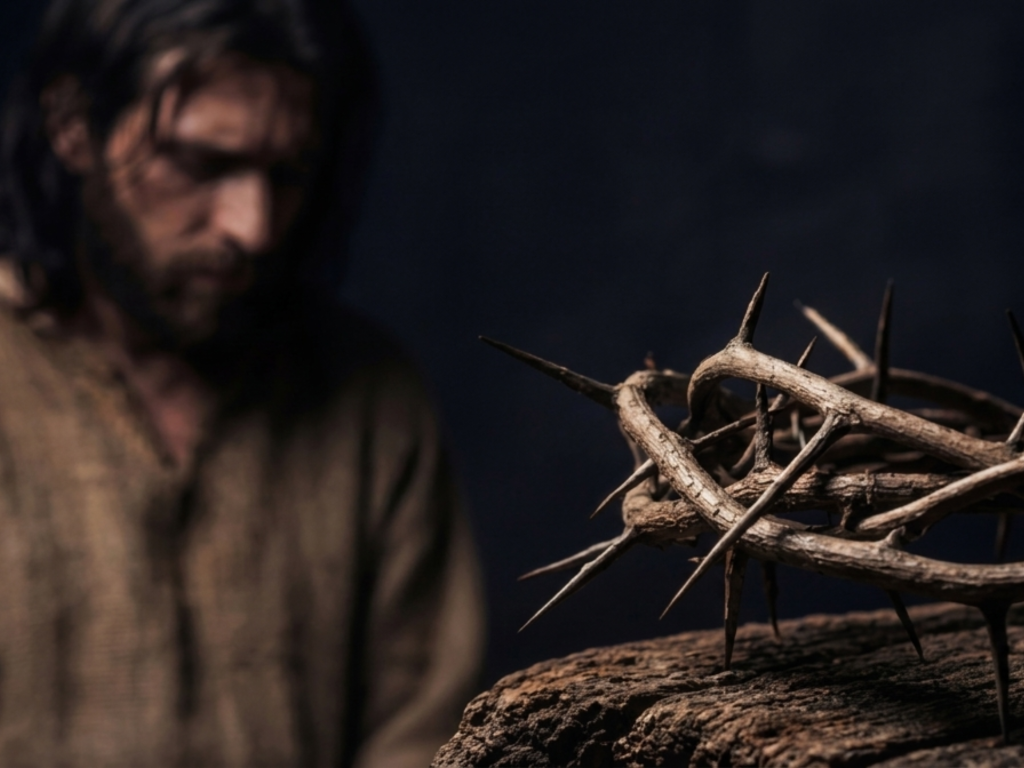
The title of today’s sermon is not a figurative expression. It is inspired by modern scientific research on the Shroud of Turin. Based on the analysis of bloodstains and impressions, researchers have concluded that the body of the Crucified bears traces of 700 lashes, as well as dozens of head wounds—50 puncture wounds—associated with a sharp crown of thorns.
These data do not replace faith. They help illuminate and confirm it—in a striking way—what the Evangelists convey briefly, yet with deep theological meaning.
The reading of the Twelve Gospels brings us into the very center of the history of salvation—the pinnacle of the Divine Economy: the Passion of our Lord.
The Evangelist Matthew writes: “…having scourged Jesus, he delivered Him to be crucified.” A single phrase—but behind it lies unspeakable bodily suffering.
The Evangelist John adds: “And the soldiers twisted a crown of thorns and put it on His head.”
What the Scriptures convey with restraint, science describes today with precision—and the result is staggering: Christ endured exceptionally brutal torture.
But the Church does not stop only at how Christ suffered. She calls us to understand why.
Centuries before, the Prophet Isaiah foretold: “He was wounded for our transgressions… and by His stripes we are healed.”
The suffering of Christ is not merely human pain. It is salvific. Voluntary. It is a manifestation of love combined with the highest humility.
Saint John Chrysostom emphasizes that Christ suffers “not by constraint, but voluntarily”—out of love for mankind.
Saint Gregory the Theologian says that “the Impassible suffers”—He who by His divine nature is not subject to suffering accepts it to heal humanity.
Saint Ephrem the Syrian sees in the crown of thorns the reversal of the Fall: the thorns of the earth’s curse become a crown of glory through Christ.
Saint Cyril of Alexandria teaches that every wound of Christ is a source of healing for man. Not a single wound of His is without salvific significance.
While Christ goes to His Passion, the people change: from “Hosanna” on Palm Sunday to “Crucify Him” on Holy Thursday. This change reveals the instability of the human heart. Saint John Chrysostom notes that the crowd is guided not by truth, but by advantage and impressions.
And here the question becomes personal: where are we? With “Hosanna” or with “Crucify Him”?
For every time we choose sin, when we are indifferent to our neighbor, when we reject the truth—we participate in the Passion of Christ not historically, but internally.
The “700 lashes” become our falls.
The “50 head wounds”—our pride and sins of the mind.
And yet, the greatness of God’s love is revealed in this tragedy. Christ does not respond with anger. He does not seek revenge. On the contrary, He prays on the Cross: “Father, forgive them, for they know not what they do.”
Herein lies the mystery of love. Herein lies the greatness of forgiveness. Even Greek literature touches upon this mystery: a person, having met Christ, cannot remain indifferent—they will either be moved or turn away. Neutrality does not exist.
Holy Thursday is not a day of mere feelings. It is a day of choice. Will we remain spectators of the Passion, or will we become participants in grace? Will we be fickle like the crowd, or will we stand firm in the love of Christ?
Let words become prayer today.
Let knowledge become repentance.
Let the Passion of Christ become our personal event.
And then, the “700 lashes” and “50 wounds” will cease to be just numbers—they will become a reminder of God’s boundless love, which does not end on the Cross but leads to the Resurrection.
With sincere paternal wishes for a blessed Pascha,
Metropolitan Cleopas of Sweden and All Scandinavia