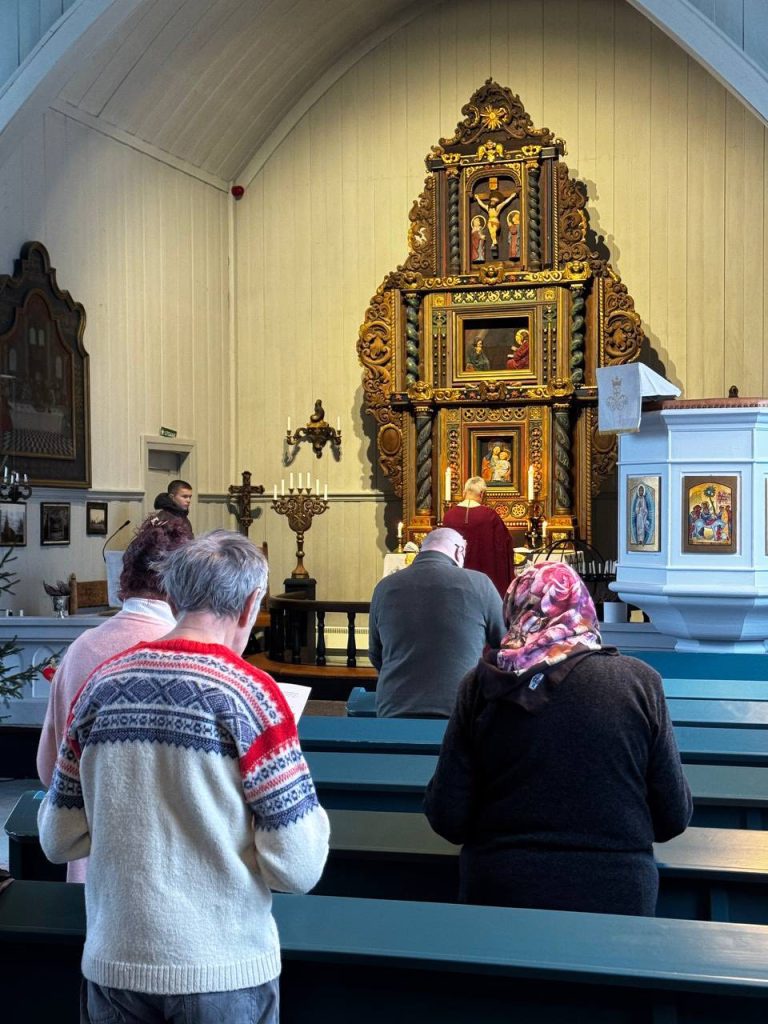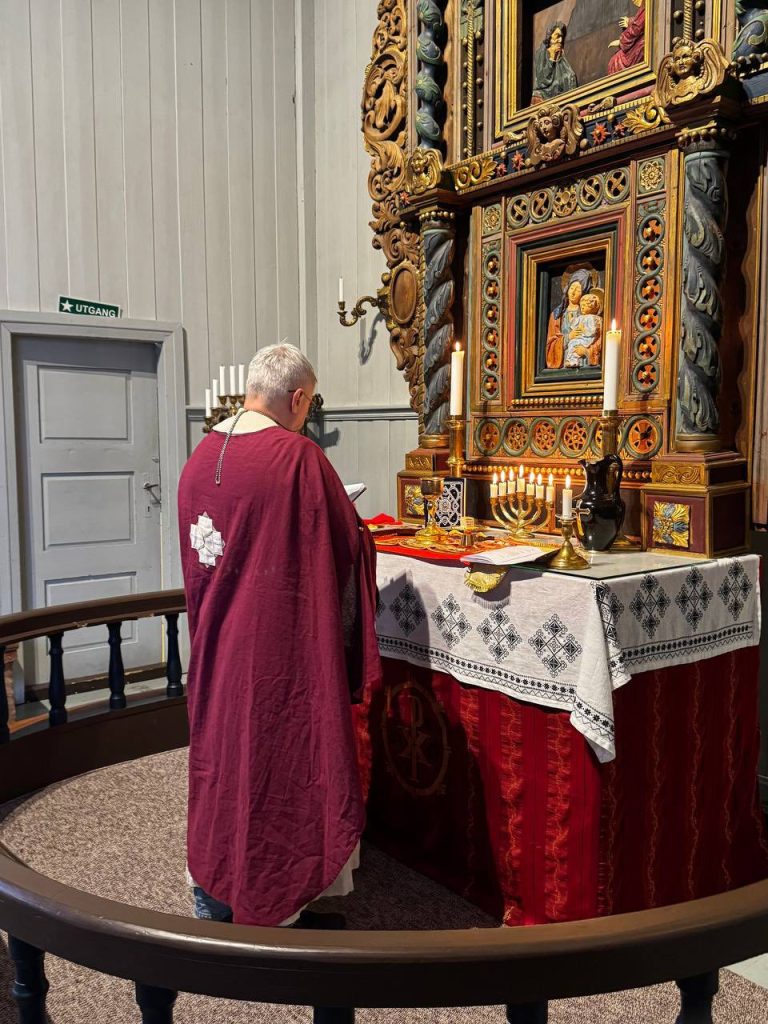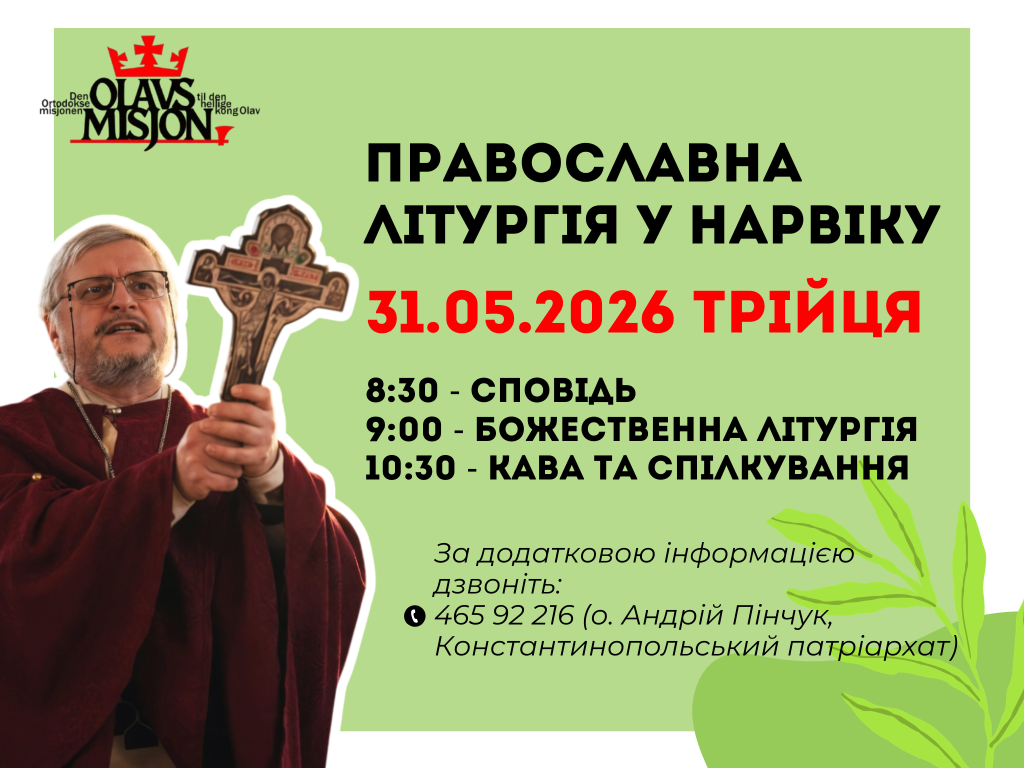
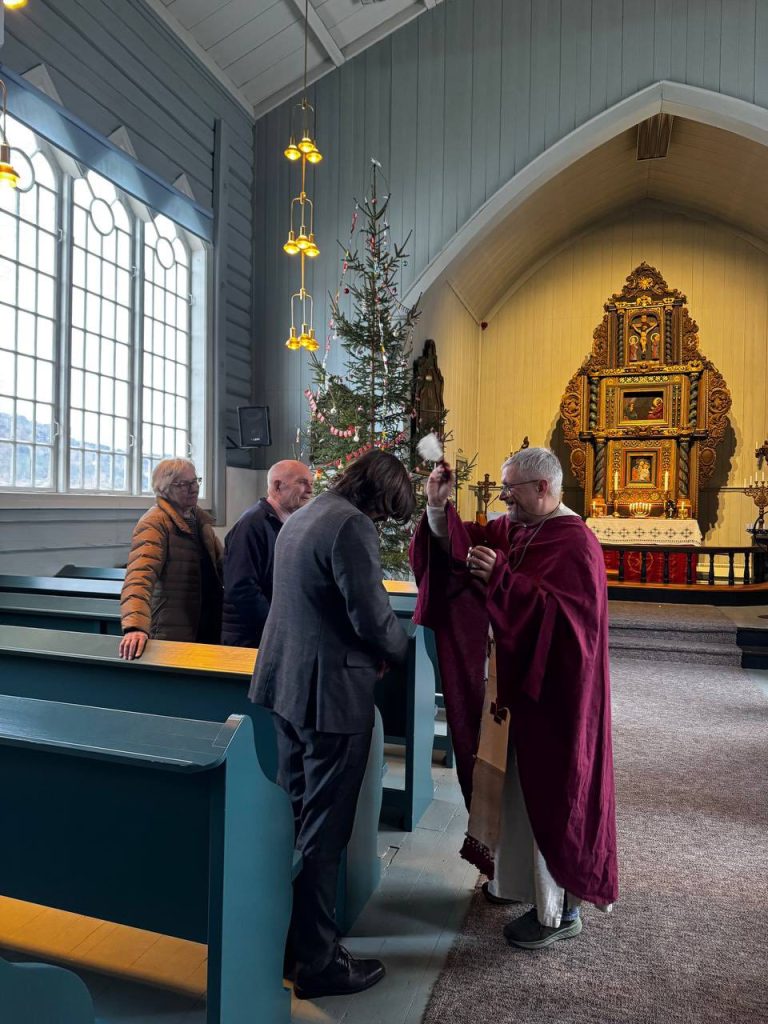
This day became another important stepping stone in the spiritual life of our community. The service was attended not only by Ukrainians but also by several local Norwegians. This is already becoming a fine tradition, so we once again duplicated certain parts of the liturgy in Norwegian, so that everyone could feel the fellowship of prayer.
It is especially interesting to observe how language unites us in this country. As is well known, Norway has two official written languages—Bokmål and Nynorsk. But the true complexity (and at the same time, beauty!) lies in the hundreds of dialects. Almost every municipality has its own speech, and sometimes they differ so much that you have to listen carefully to understand your interlocutor. Right now, I am doing my language practice at the church office of the Lutheran church in our town. All my colleagues are incredibly considerate people. Usually, in daily life, they speak their native dialects, but I noticed an interesting thing: as soon as I appear nearby, everyone instantly switches to “pure” Bokmål. I smiled when they admitted that they do this solely for my sake, since Bokmål is precisely what we study in language school.
Father Andrii Pinchuk
This tactfulness and desire to meet halfway—in prayer, in work, or simply in conversation—is what makes our stay here warmer. Even if we speak different dialects, our language of the heart is the same.